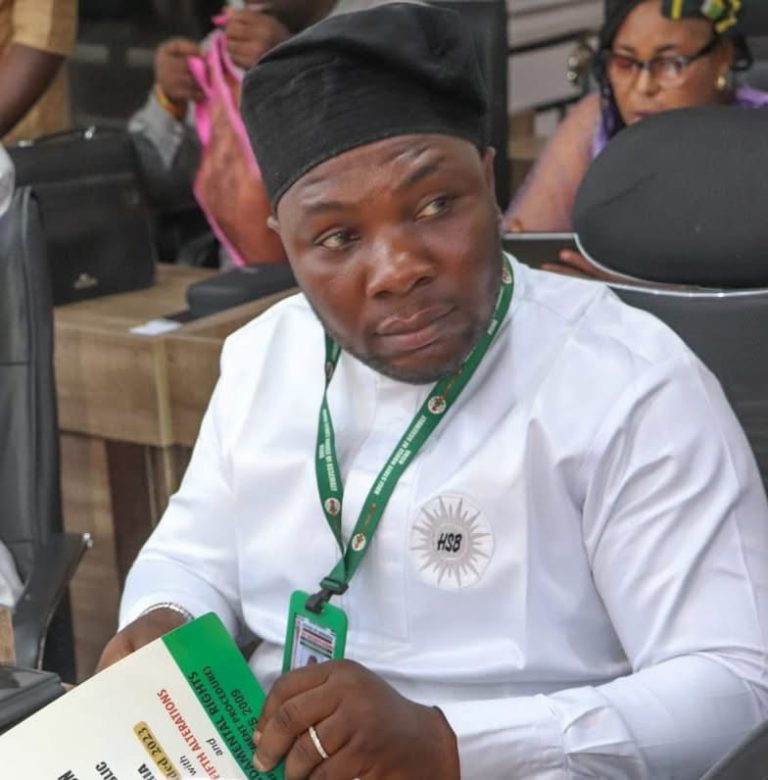
Hon. Seyi Bello’s lengthy response attempts to list numerous “achievements,” but unfortunately most of the items mentioned either do not reflect the true responsibilities of a State Assembly member or lack clear evidence, locations, and measurable impact.
First, listing activities without specific locations, timelines, or verifiable records raises serious questions. When projects are truly executed across a constituency, the communities that benefited are clearly identified. Simply mentioning classroom blocks, borehole repairs, or renovations without naming exact schools, communities, or dates makes it difficult for the public to confirm whether these projects truly exist or are just political talking points.
Secondly, many of the things presented as achievements are not legislative achievements at all.
A member of the State House of Assembly is elected primarily to make laws, sponsor impactful bills, move motions that translate into concrete government action, and effectively represent the constituency. Unfortunately, most of the items listed are either small personal donations or routine government activities.
Training people in shoe making, bead making, tie-and-dye, soap production and similar minor skills cannot seriously be presented as major achievements for a lawmaker representing an entire constituency. These are small-scale empowerment activities that NGOs, youth groups, and community associations routinely organize. For a sitting Assembly member, the expectation from the people is larger, structured economic opportunities, sustainable development programs, and tangible infrastructure, not token trainings.
Even more concerning is the attempt to claim credit for the establishment of Kogi State University, Kabba.
The truth is that the university was not the personal project of any single Assembly member. It was a government policy decision that involved multiple stakeholders, executive planning, and collective legislative approval. Being one of many lawmakers who spoke during debate or served on a committee cannot be presented as a personal achievement.
Similarly, the claim regarding the restoration of suppressed constituencies and INEC-related matters is misleading. Many people within Kabba/Bunu know that the major agitation and protests were driven primarily by the Local Government Chairman and community stakeholders who pushed the issue strongly. Suggesting that the Assembly member alone initiated or drove that process does not accurately reflect what actually happened.
Furthermore, moving motions is not the same as delivering results.
Many of the motions mentioned — including water works and infrastructure advocacy — remain largely unimplemented promises rather than completed projects. The people judge representation by visible outcomes, not by speeches on the floor of the House.
Another point that deserves attention is that several items listed are not constituency projects but personal gestures, such as paying party office rent or donating to junction repairs. While such gestures may be appreciated, they cannot replace the core responsibility of effective legislative representation and development facilitation.
The fundamental issue remains simple: after several years in office, Kabba/Bunu people expect clear, verifiable, large-scale projects and legislative impact that match the position of a State Assembly member. Unfortunately, the long list presented fails to demonstrate that level of performance.
Democracy allows leaders to defend themselves, but it also gives citizens the right to critically assess whether the representation they have received is worth renewing at the ballot box.
Based on the claims presented so far, many constituents believe that the performance does not justify another mandate.
About the Author